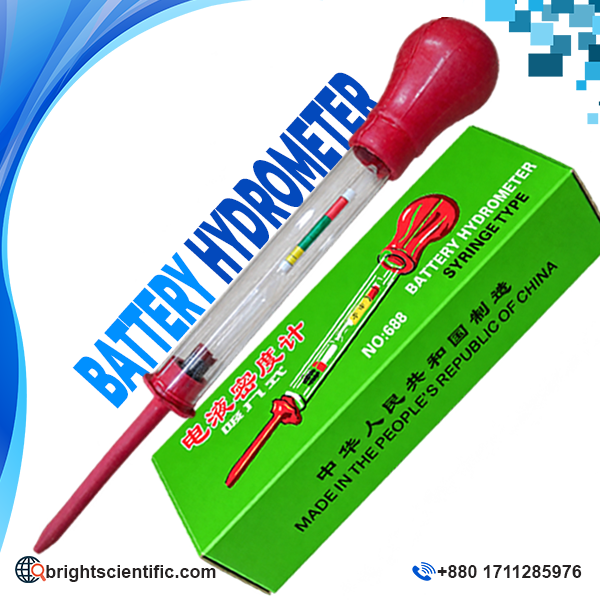


Battery Hydrometer 1.100~1.300
Product Overview
Battery Hydrometer 1.100~1.300 is a manual instrument used to measure the specific gravity of electrolyte in compatible lead-acid batteries. Specific gravity indicates the density of the electrolyte compared with water and can help users evaluate battery charge condition and identify differences between battery cells.
This battery hydrometer is designed for electrolyte testing within a specific gravity range of 1.100 to 1.300. It is commonly used in automotive maintenance, battery servicing, UPS systems, solar power installations, and other applications that use flooded lead-acid batteries.
A typical suction-type battery hydrometer consists of a transparent tube, a floating graduated scale, a rubber suction bulb, and a sampling nozzle. The suction mechanism draws electrolyte into the tube, allowing the float to rise according to the liquid’s density. Users can then read the specific gravity from the scale.
M/S Bright Scientific Co. supplies scientific equipment and technical products in Bangladesh. Contact Bright Scientific for the latest price and availability of Battery Hydrometer 1.100~1.300.
Product Specifications
- Product Name: Battery Hydrometer
- Measurement Range: 1.100~1.300 Specific Gravity (SG)
- Measurement Parameter: Battery Electrolyte Density
- Operating Principle: Floating Hydrometer Method
- Typical Construction: Transparent tube, graduated float, rubber bulb, and sampling nozzle
- Primary Application: Lead-Acid Battery Testing
- Product Category: Battery Testing Equipment
- Supplier: M/S Bright Scientific Co., Bangladesh
Specifications such as accuracy, scale divisions, dimensions, calibration temperature, brand, and country of origin should be confirmed from the actual product label or supplier documentation.
Key Features of Battery Hydrometer 1.100~1.300
1. Specific Gravity Measurement
The hydrometer measures the specific gravity of electrolyte in compatible lead-acid batteries. This measurement can support routine battery inspection and help technicians assess electrolyte conditions.
2. Measurement Range of 1.100 to 1.300
Its measurement range covers specific gravity values from 1.100 to 1.300. Users should ensure that the expected electrolyte reading falls within this range before testing.
3. Simple Manual Operation
A suction-type hydrometer is straightforward to operate when used according to its instructions. The rubber bulb draws a small sample of electrolyte into the tube, allowing the floating scale to indicate the specific gravity.
4. Portable Design
Many battery hydrometers feature a compact design that is convenient for workshops, maintenance rooms, and battery service locations. The exact size and included storage case depend on the supplied model.
5. Supports Battery Maintenance
Comparing specific gravity readings across individual cells can help identify differences that may require further inspection. Hydrometer readings should be evaluated alongside battery voltage, temperature, charging history, and the manufacturer’s recommendations.
Applications of Battery Hydrometer 1.100~1.300
Automotive Workshops: Technicians can use a compatible battery hydrometer to inspect electrolyte density in serviceable vehicle batteries.
UPS and Backup Power Systems: It can support maintenance checks for accessible-electrolyte lead-acid batteries used in backup power systems.
Solar Power Installations: Users may monitor electrolyte specific gravity in compatible flooded lead-acid batteries used for energy storage.
Industrial Battery Maintenance: Maintenance personnel can use hydrometer readings as part of an established battery inspection procedure.
Battery Service Centers: The instrument can help technicians compare electrolyte readings across battery cells during servicing.
How to Use a Battery Hydrometer
First, follow the battery manufacturer’s instructions and wear suitable protective equipment. Carefully draw enough electrolyte into the hydrometer for the float to move freely. Hold the instrument upright and read the graduated scale at eye level once the float stabilizes.
Temperature can affect specific gravity readings, so apply the manufacturer’s recommended temperature correction when necessary. Compare results with the reference values specified for the particular battery. Do not use the hydrometer with sealed batteries that do not provide access to the electrolyte.
Safety and Maintenance
Lead-acid battery electrolyte contains sulfuric acid, which can cause serious skin and eye injuries. Wear acid-resistant gloves and appropriate eye protection, avoid splashes, and work in a suitable ventilated area. Handle glass components carefully, rinse the instrument as instructed after use, and store it safely to prevent breakage or contamination.
Buy Battery Hydrometer 1.100~1.300 in Bangladesh
M/S Bright Scientific Co. supplies scientific equipment and laboratory products to professional users across Bangladesh. Contact Bright Scientific to confirm the current price, availability, specifications, and delivery arrangements for Battery Hydrometer 1.100~1.300.
Before ordering, verify the measurement range, construction material, accuracy, and compatibility with your battery type.
Frequently Asked Questions (FAQ)
1. What is Battery Hydrometer 1.100~1.300?
It is a manual instrument used to measure the specific gravity of electrolyte in compatible lead-acid batteries.
2. What does the 1.100~1.300 range mean?
It represents the specific gravity range the hydrometer is designed to measure.
3. What is a battery hydrometer used for?
It helps assess electrolyte density and supports battery condition and charge-state checks.
4. Can it be used with sealed batteries?
Generally, no. It is intended for batteries with accessible electrolyte, such as suitable flooded lead-acid batteries.
5. Does temperature affect the reading?
Yes. Electrolyte temperature can affect specific gravity measurements. Follow the battery manufacturer’s temperature-correction guidance.
6. Where can I buy Battery Hydrometer 1.100~1.300 in Bangladesh?
Contact M/S Bright Scientific Co. to check the latest price, availability, and delivery options.