1,1-Diphenyl-2-picrylhydrazyl (DPPH) Free Radical – 1gm
Product Description
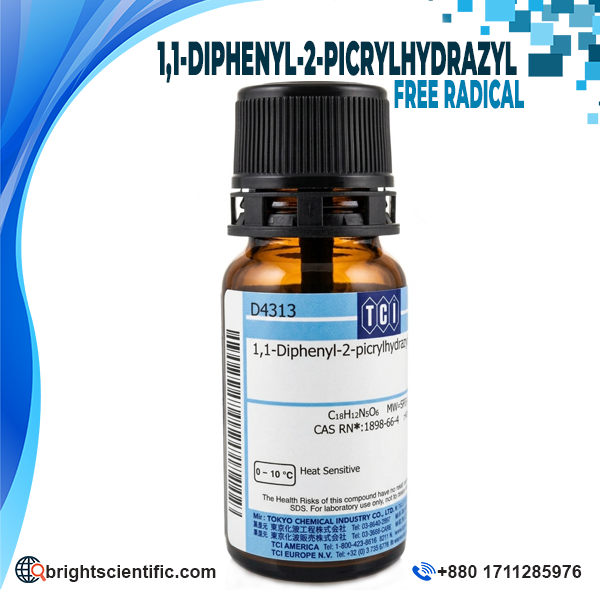
1,1-Diphenyl-2-picrylhydrazyl (DPPH) Free Radical is a stable free-radical chemical reagent widely used in laboratory research, antioxidant activity evaluation, and analytical chemistry. This reagent is particularly useful for studying the free-radical scavenging activity of antioxidants in scientific research. The DPPH assay is a commonly used method for evaluating the antioxidant potential of plant extracts, food samples, and various chemical compounds.1,1-Diphenyl-2-picrylhydrazyl Free Radical – 1Gm
Bright Scientific offers TCI DPPH Free Radical in a convenient 1gm pack size, suitable for laboratory experiments, research activities, and analytical testing where a small quantity of reagent is required.1,1-Diphenyl-2-picrylhydrazyl Free Radical – 1Gm
Chemical Information
DPPH is an organic nitrogen-containing free radical that exhibits a deep violet or purple colour in solution. During an antioxidant assay, antioxidant compounds can react with DPPH and reduce its radical form. This reaction causes a change in colour, which can be measured using a spectrophotometer to evaluate antioxidant activity.
The colour change and absorbance reduction provide useful analytical information about the radical-scavenging capacity of the tested sample. Results depend on experimental conditions, reagent concentration, solvent, reaction time, and the nature of the sample.
Key Features of DPPH Free Radical
- Product Name: 1,1-Diphenyl-2-picrylhydrazyl Free Radical
- Common Name: DPPH Free Radical
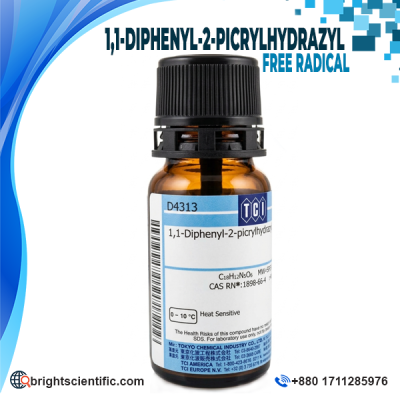
- Product Code: D4313
- CAS Number: 1898-66-4
- Molecular Formula: C18H12N5O6
- Molecular Weight: 394.32 g/mol
- Purity: Minimum 97.0% (HPLC), as specified for the TCI product
- Pack Size: 1gm
- Brand: TCI
- Origin: Japan
Applications of DPPH Reagent
1. Antioxidant Activity Testing
DPPH is commonly used to evaluate the antioxidant potential of different compounds and samples. The assay helps researchers compare the radical-scavenging activity of substances under controlled laboratory conditions.1,1-Diphenyl-2-picrylhydrazyl Free Radical – 1Gm
2. Plant Extract Research
Researchers use DPPH assays to investigate antioxidant properties in plant extracts, herbs, leaves, fruits, and other botanical materials. It is frequently used in natural product research.1,1-Diphenyl-2-picrylhydrazyl Free Radical – 1Gm
3. Food Science and Food Chemistry
In food research, DPPH can help evaluate the antioxidant capacity of selected food ingredients and extracts. It supports laboratory investigations into antioxidant compounds in food-related samples.1,1-Diphenyl-2-picrylhydrazyl Free Radical – 1Gm
4. Pharmaceutical and Biochemical Research
DPPH is useful in experimental studies involving antioxidant compounds and their chemical properties. Researchers may use it when screening samples for potential antioxidant activity.
5. Analytical Chemistry and Academic Research
The reagent is suitable for research laboratories, universities, chemistry departments, and scientific institutions conducting antioxidant assays and related experimental investigations.1,1-Diphenyl-2-picrylhydrazyl Free Radical – 1Gm
Why Choose TCI DPPH Free Radical?
TCI is a recognised supplier of laboratory chemicals and research reagents. The D4313 product is identified by its product code and CAS number, helping laboratories select the appropriate chemical for their experimental requirements.
The 1gm pack size is convenient for small-scale research and routine laboratory testing. Before use, researchers should verify the required purity, analytical method, and experimental procedure for their specific application.1,1-Diphenyl-2-picrylhydrazyl Free Radical – 1Gm
Handling and Storage
DPPH is a laboratory chemical that requires appropriate handling precautions. Consult the current Safety Data Sheet (SDS) before use. Wear suitable protective gloves, eye protection, and appropriate laboratory clothing. Avoid inhaling dust and prevent contact with skin and eyes.1,1-Diphenyl-2-picrylhydrazyl Free Radical – 1Gm
Keep the chemical in its appropriate original container and follow the supplier’s recommended storage conditions. Protect it from unsuitable environmental conditions, including excessive heat. Store and dispose of the reagent according to the applicable laboratory safety procedures and local regulations.
LABORATORY USE ONLY, NO ANOTHER USE.
Frequently Asked Questions (FAQ)
Q1. What is DPPH Free Radical?
DPPH is a stable free-radical reagent commonly used to evaluate the antioxidant activity of compounds and extracts.
Q2. What is the pack size of this product?
This product is supplied in a 1gm pack size.
Q3. What is the CAS number of DPPH?
The CAS number is 1898-66-4.
Q4. What is the molecular formula of DPPH?
Its molecular formula is C18H12N5O6.1,1-Diphenyl-2-picrylhydrazyl Free Radical – 1Gm
Q5. What is the molecular weight of DPPH?
The molecular weight is approximately 394.32 g/mol.
Q6. What is DPPH used for in laboratories?
It is primarily used in antioxidant assays to study the free-radical scavenging activity of chemical compounds, plant extracts, and other research samples.1,1-Diphenyl-2-picrylhydrazyl Free Radical – 1Gm
Q7. Which brand manufactures this product?
The product code D4313 refers to the TCI Chemicals product.
Q8. Is DPPH suitable for food or medical use?
This product is intended for laboratory research and analytical applications, not for direct consumption or medical use.1,1-Diphenyl-2-picrylhydrazyl Free Radical – 1Gm
Q9. Where can I purchase DPPH Free Radical in Bangladesh?
You can contact M/S Bright Scientific Co. for product availability, current pricing, and ordering information.1,1-Diphenyl-2-picrylhydrazyl Free Radical – 1Gm