
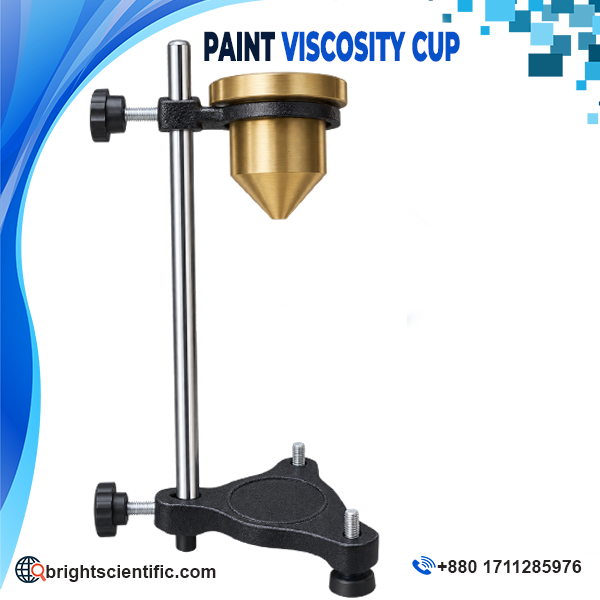
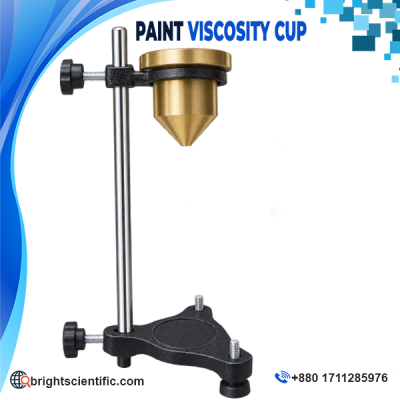
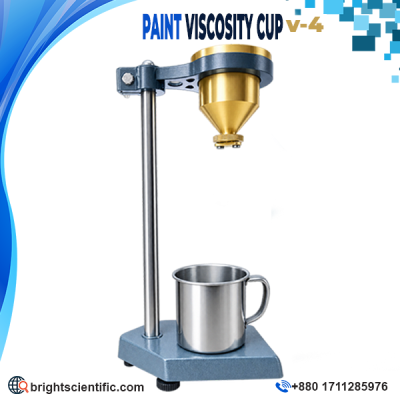
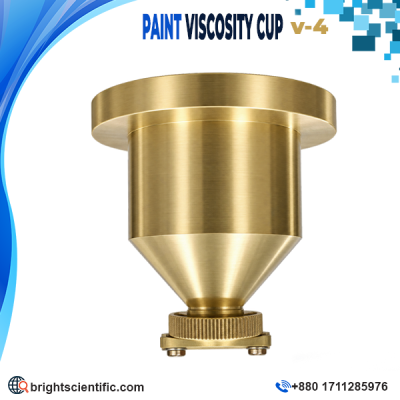
Paint Viscosity Cup V-4
The Paint Viscosity Cup V-4 is a practical viscosity measurement instrument designed for checking the flow characteristics and consistency of paints, coatings, inks, varnishes, and other liquid materials. Viscosity cups work by allowing a liquid sample to flow through a calibrated opening while the efflux time is measured. This provides a simple and convenient way to compare the flow behavior of different coating materials and monitor consistency during production or quality-control procedures.Paint Viscosity Cup V-4
What is a Paint Viscosity Cup?
A viscosity cup is an efflux-type measuring device used to evaluate the viscosity or flow behavior of liquids. The test is generally performed by filling the cup with the sample, allowing the liquid to flow through the outlet, and recording the time required for the flow to reach the specified endpoint. The measured time can then be compared with an established specification or converted using the applicable cup calibration information.Paint Viscosity Cup V-4
Viscosity cups are widely used in the paint and coating industry because maintaining consistent viscosity is important for application performance, coating thickness, spray behavior, leveling, and overall finish quality.Paint Viscosity Cup V-4
Key Features
- Designed for paint and coating viscosity testing
- Simple and practical efflux-time measurement method
- Suitable for comparative viscosity checks
- Useful for laboratory and production quality control
- Can be used with paints, coatings, inks, varnishes, and similar liquids
- Easy to operate and clean when handled according to the applicable procedure
- Helps monitor consistency between production batches
Applications
The Paint Viscosity Cup V-4 can be used for viscosity-related quality-control checks in a variety of applications, including:
- Paint manufacturing
- Industrial coatings
- Decorative coatings
- Automotive coatings
- Printing inks
- Varnishes and lacquers
- Surface-finishing materials
- Chemical laboratories
- Research and development
- Production quality control
For coating applications, viscosity measurements can help determine whether a material has suitable flow characteristics for a particular application process.Paint Viscosity Cup V-4
How Does a Viscosity Cup Work?
A typical viscosity cup is filled with a representative liquid sample. The cup is then positioned according to the applicable testing procedure and the sample is allowed to flow through its calibrated outlet. A stopwatch or suitable timing device is used to record the efflux time.Paint Viscosity Cup V-4
Because viscosity is affected by temperature, sample temperature should be controlled and recorded when performing comparative measurements. The same test procedure, cup, temperature, sample preparation, and endpoint should be maintained when comparing different batches.Paint Viscosity Cup V-4
The measured flow time should be interpreted according to the relevant specification, calibration data, or standard applicable to the particular viscosity cup being used.Paint Viscosity Cup V-4
Importance in Paint Quality Control
Paint viscosity directly affects how a coating behaves during application. If the material is too thick, it may not flow or atomize properly. If it is too thin, the coating may have inadequate coverage or behave differently during application. Regular viscosity checks can therefore help manufacturers maintain consistent product quality.Paint Viscosity Cup V-4
A viscosity cup provides a straightforward method for monitoring changes in liquid flow behavior without requiring a complex electronic viscometer.
Proper Testing Practice
For reliable comparative results, the viscosity cup should be clean and free from dried paint or particles, particularly around the outlet. The sample should be properly mixed and free from unwanted contamination. Temperature should be controlled because viscosity changes with temperature.Paint Viscosity Cup V-4
For formal quality-control work, users should follow the testing method and calibration requirements specified for their particular cup and application. Manufacturer or applicable ASTM/ISO procedures should be followed where required.
FAQ
1. What is a Paint Viscosity Cup?
A Paint Viscosity Cup is an efflux-type instrument used to evaluate the flow characteristics of paints, coatings, inks, and other liquids by measuring flow time.Paint Viscosity Cup V-4
2. What is the Paint Viscosity Cup V-4 used for?
It is used for checking and comparing the viscosity or flow behavior of liquid coating materials.Paint Viscosity Cup V-4
3. How does a viscosity cup measure viscosity?
The liquid is allowed to flow through the cup’s calibrated outlet, and the required flow or efflux time is measured.Paint Viscosity Cup V-4
4. Can it be used for paint testing?
Yes. Viscosity cups are commonly used for paint and coating quality-control applications.Paint Viscosity Cup V-4
5. Can it be used for inks and varnishes?
Yes, viscosity cups can be used for suitable liquid materials such as inks, varnishes, lacquers, and coatings, provided the cup’s applicable range and procedure are appropriate.
6. Why is temperature important during testing?
Liquid viscosity changes with temperature. Maintaining a consistent temperature helps make comparative measurements more reliable.
7. How should the cup be maintained?
The cup should be cleaned after use and the outlet should be kept free from dried material, dust, and other obstructions.
8. Is a viscosity cup suitable for quality control?
Yes. It provides a simple method for monitoring batch-to-batch consistency and changes in coating flow behavior.
9. Does flow time directly equal viscosity?
Not necessarily. Efflux time should be interpreted using the calibration information or conversion method applicable to the specific viscosity cup.
10. Where can Paint Viscosity Cup V-4 be used?
It can be used in paint manufacturing, coating production, laboratories, research facilities, and industrial quality-control environments.



Reviews
There are no reviews yet.