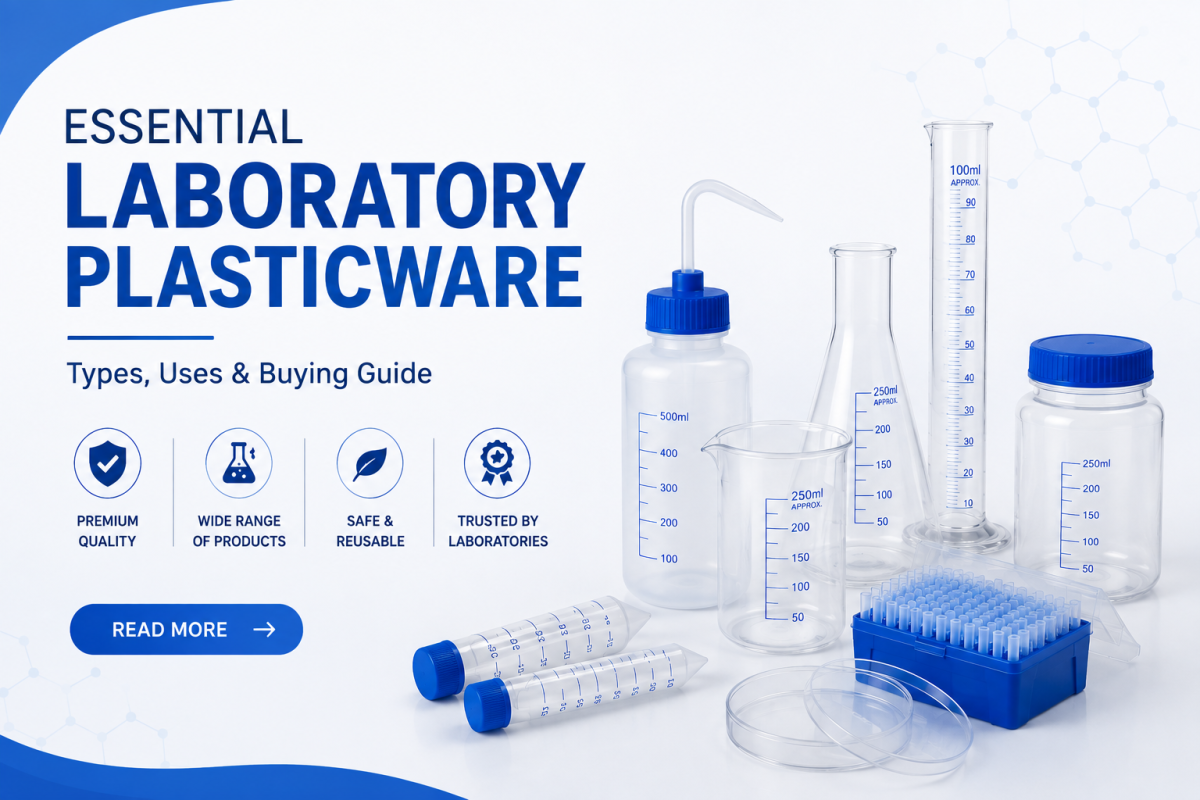
Laboratory plasticware plays a crucial role in scientific experiments across various fields including chemistry, biology, and medicine. Unlike glassware, plastic lab equipment is often preferred for its lightweight nature, durability, and cost-effectiveness. If you’re based in Dhaka, Khulna, Chittagong, Rajshahi, Barishal, or Rangpur, understanding the different types of laboratory plasticware and their uses can help you select the right tools for your experiments. This comprehensive guide will cover everything you need to know about laboratory plasticware, from its types to how it’s used, along with some local tips for purchasing scientific equipment in Bangladesh.
What is Laboratory Plasticware and Why is it Important?
Laboratory plasticware refers to the various plastic tools and containers used in laboratories for holding, mixing, storing, and transferring liquids or solids. These are essential in a laboratory setting, providing safer, lighter alternatives to glassware and helping reduce the risks associated with breakage.
Benefits of Laboratory Plasticware:
- Cost-Effective: Plasticware is often less expensive than glassware, making it a popular choice for laboratories with large-scale needs.
- Durability: Plastic tools are more resistant to breakage, reducing the chances of accidents.
- Lightweight: Plastics are easier to handle, especially in fast-paced environments.
- Chemical Resistance: Certain plastic materials are highly resistant to chemicals, making them ideal for specific types of laboratory work.
Common Uses of Plasticware in Bangladeshi Laboratories
Laboratory plasticware is used in various scientific fields such as chemistry, biology, medicine, and pharmaceutical research. In places like Dhaka, Chittagong, and Rajshahi, scientific institutions, schools, and industries rely on high-quality plastic labware for their experiments.
Types of Laboratory Plasticware and Their Uses
Laboratory plasticware comes in many shapes and sizes, each serving a specific purpose. Here is a comprehensive list of the most common types of plasticware used in laboratories in Bangladesh.
1. Plastic Beakers
- Use: For mixing, heating, and holding liquids. These beakers are ideal for both general use and specific chemical applications.
- Popular Sizes: 50 ml, 100 ml, 250 ml, and 1000 ml.
- Common Use: Chemistry labs in Dhaka and Rajshahi frequently use plastic beakers for routine liquid handling tasks.
2. Plastic Test Tubes
- Use: Used for holding small amounts of chemicals or liquids during experiments.
- Tip: Test tubes are available in different sizes and are often used for heating or mixing substances.
- Common in: Biology labs across Khulna and Chittagong.
3. Plastic Pipettes
- Use: For transferring precise amounts of liquid from one container to another. Available in both manual and automatic types.
- Size: Pipettes generally measure from 1 ml to 25 ml.
- Use Case: Essential in research labs and pharmaceutical labs in Dhaka for accurate liquid handling.
4. Plastic Flasks (Erlenmeyer and Florence)
- Use: Used for mixing liquids or for storing chemical solutions.
- Type: Erlenmeyer flasks have a conical shape, while Florence flasks are round-bottomed.
- Common in: Used widely in chemical research labs in Barishal and Rangpur.
5. Plastic Graduated Cylinders
- Use: For measuring specific volumes of liquids with precision.
- Common Sizes: 50 ml, 100 ml, 500 ml.
- Recommended Use: Ideal for academic labs in Rajshahi.
6. Plastic Funnels
- Use: For transferring liquids or powders into containers with smaller openings without spillage.
- Tip: Funnels come in various sizes and are great for filtering liquids with filter paper.
7. Plastic Petri Dishes
- Use: Used for culturing cells, bacteria, or fungi in microbiological applications.
- Material: Usually made from clear plastic to allow visibility of cultures.
- Common Use: Extensively used in microbiology labs in Chittagong.
8. Plastic Burettes
- Use: Used in titration experiments to dispense precise amounts of liquid.
- Safety Tip: Make sure there are no air bubbles in the burette for accurate readings.
9. Plastic Wash Bottles
- Use: Used to rinse various types of glassware or plasticware in the lab.
- Materials: Typically made of high-density polyethylene (HDPE).
10. Plastic Storage Bottles
- Use: For storing various chemicals, solutions, or samples.
- Size: Available in various sizes from 50 ml to 5 liters.
- Common in: Pharmaceutical labs and chemical storage facilities.
11. Plastic Desiccators
- Use: For storing moisture-sensitive substances in a dry environment.
- Material: Made of durable plastic with airtight seals.
- Popular in: Pharmaceutical and biotechnology labs in Dhaka.
12. Plastic Beaker Stir Bars
- Use: For stirring liquids inside beakers.
- Material: These bars are magnetic and made from strong plastic material.
Common Client Mistakes to Avoid
While plasticware is highly useful in laboratories, many people make mistakes when choosing or using these products. Here are a few to watch out for:
- Choosing the wrong material: Not all plastics are resistant to all chemicals. Make sure to choose the right material that can handle specific chemicals or substances.
- Overheating plasticware: Plastics have varying resistance to heat. Always verify the temperature resistance before use.
- Improper storage: Storing plasticware improperly can lead to deformation or degradation over time. Always store it in a clean, dry area.
- Underestimating the importance of cleanliness: Plasticware is prone to contamination if not cleaned correctly. Always ensure thorough cleaning after each use.
When to Call a Professional in Dhaka
If you’re unsure about which laboratory plasticware to choose or if you’re facing issues with your current tools, it’s always a good idea to consult with a local professional. Here’s when you should call for assistance:
- When plasticware is showing signs of wear or cracks.
- If you need help choosing the right type of plasticware for a specific experiment.
- When you notice contamination or staining in your equipment, which can affect your results.
- If you’re unsure about the chemical compatibility of the plasticware with the substances you’re using.
In Dhaka, Chittagong, and other cities, Bright Scientific can provide expert advice and high-quality plasticware to meet your laboratory needs.
Why Choose Us for Laboratory Plasticware in Dhaka and Beyond?
At Bright Scientific, we pride ourselves on offering high-quality plasticware for Bangladesh’s scientific community, from Dhaka to Rangpur and Barishal. Here’s why you should choose us for all your laboratory needs:
- Top-Quality Products: Our plasticware is sourced from trusted manufacturers and made to last.
- Affordable Pricing: We offer competitive prices to ensure you get the best value.
- Nationwide Delivery: Whether you are in Khulna, Rajshahi, or Rangpur, we deliver across Bangladesh.
- Expert Assistance: Our team provides knowledgeable advice to help you choose the right equipment.
Explore Our Full Range of Laboratory Plasticware Here
Cost of Laboratory Plasticware in Bangladesh
The cost of laboratory plasticware can vary depending on the type and size. Generally, smaller items like pipettes and test tubes may range from BDT 100-500, while larger items like plastic beakers or graduated cylinders may cost anywhere between BDT 500-1500. For bulk orders or specialized equipment, you can get discounts based on the quantity purchased.
Maintenance Tips for Laboratory Plasticware
- Regular Cleaning: Always clean your plasticware immediately after use to avoid the buildup of residues.
- Avoid Harsh Chemicals: Don’t use strong solvents or cleaning agents that might degrade the plastic.
- Proper Storage: Store plasticware in a cool, dry place to avoid warping or cracking.
- Explore Laboratory Glassware Options
- Learn More About Lab Equipment in Dhaka
- Get Chemistry Lab Equipment Prices in Bangladesh
Local FAQs
- What is the most commonly used plasticware in Bangladeshi labs?
Plastic beakers and test tubes are commonly used in laboratories across Bangladesh. - How much does laboratory plasticware cost in Bangladesh?
The price varies from BDT 100 to BDT 1500, depending on the size and type of plasticware. - Can I buy laboratory plasticware online in Bangladesh?
Yes, Bright Scientific offers online ordering for laboratory plasticware with nationwide delivery. - What should I look for when choosing laboratory plasticware?
Ensure the plasticware is chemical-resistant, heat-resistant, and durable for your specific applications. - How do I clean plastic laboratory equipment?
Rinse immediately after use with water, then clean with a mild detergent and rinse thoroughly. - Can laboratory plasticware break like glassware?
No, plasticware is more durable and less likely to break than glassware. - Is laboratory plasticware suitable for high-temperature experiments?
Some plasticware can handle high temperatures, but always check the temperature resistance before use.
For all your laboratory plasticware needs in Dhaka, Chittagong, Rajshahi, and beyond, Bright Scientific offers the best solutions. Visit us today at M/S Bright Scientific Co. to place your order!